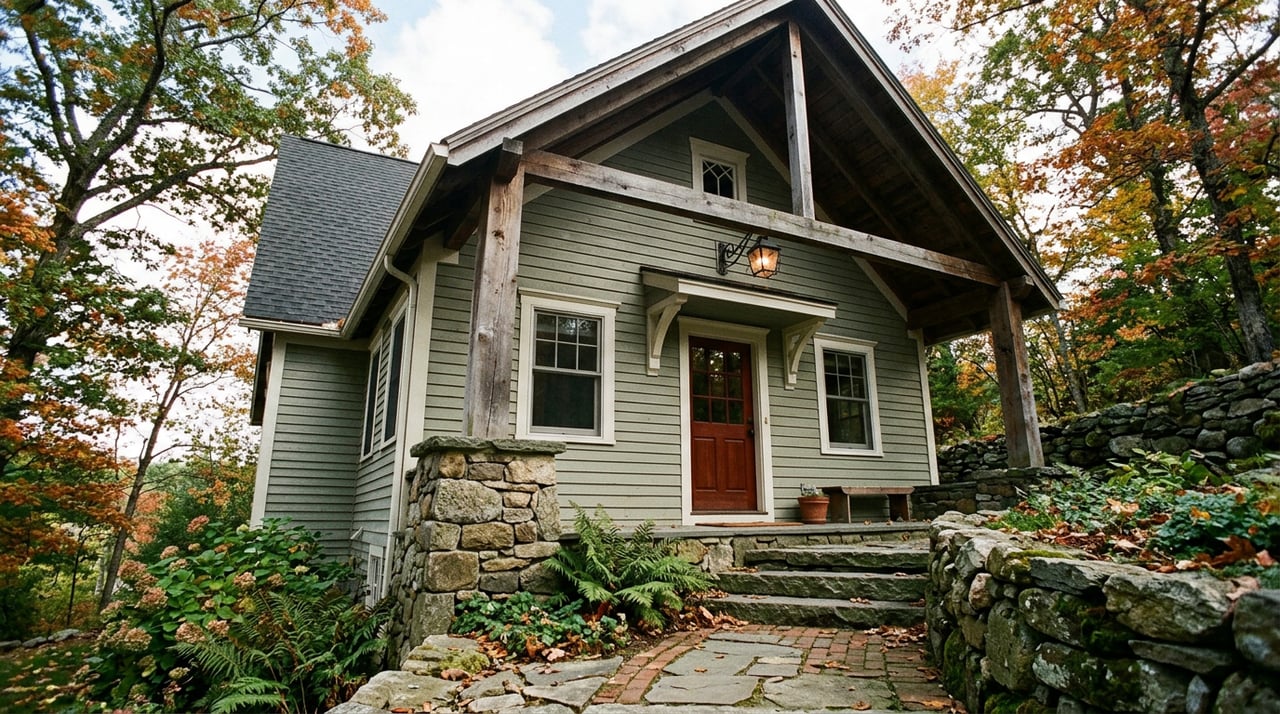
Ask a buyer under contract on Cady Street or High Street what happens the week after closing, and most say some version of the same thing: paint the trim, maybe swap out a storm door, get moved in before the weather turns. Ask the Northville Historic District Commission the same question and you get a different answer. Before a paintbrush touches an exterior wall inside the district, an application has to clear a monthly meeting that runs on a calendar no listing sheet mentions.
The house you're buying in downtown Northville comes with three separate clocks that start running independently of your closing date. A review calendar that meets once a month. A county line that decides which office processes your paperwork and your tax bill. And a tax reset that lands the moment your deed records. None of it shows up during a showing. All three show up in year one.
The Calendar Nobody Mentions At the Open House
Northville's historic district was designated in 1972, one of the earliest in Michigan, with the Historic Preservation Ordinance following in 1974. It now covers more than 400 residential and commercial properties clustered around downtown. Any exterior change inside that boundary, and in some cases interior work tied to historic features, needs a Certificate of Appropriateness from the Historic District Commission before a building permit can even be pulled.
The commission meets the third Wednesday of the month at City Hall, 215 W. Main Street, and the submission deadlines are firm. The next meeting is October 21, with complete applications due by September 30. Miss that Wednesday by a day and the file waits until November 18, not because anyone is being difficult, but because that's the schedule. Design-build contractors working across southeast Michigan's historic commissions, including Northville's, generally quote four to eight weeks of added review time before permitting even starts, on top of whatever the actual construction takes.
That timeline compounds fast on real projects. One family who bought a 1,450-square-foot Victorian farmhouse in the district in fall 2019 planned a two-story addition to expand the kitchen and add a primary suite, targeting completion by spring 2023 and a final size of roughly 2,250 square feet. That's a multi-year arc for a single addition, not a single permitting delay. Another longtime resident who spent two years searching for a historic Northville home before buying on Cady Street put it plainly:
"Totally renovating a historic home is both exciting, and an enormous burden for homeowners."
The city updated its Historic District Design Guidelines in August 2024, the first full rewrite since 1999, after officials noted that development pressure downtown had become substantial and ongoing. The new guidelines are more detailed than the ones they replaced, which cuts both ways for a buyer: less ambiguity about what will pass review, but also more specific standards to satisfy on things like porch board direction, window trim, and paint sheen.
Which Side of the County Line Your Parcel Sits On
Northville's downtown straddles Wayne and Oakland counties. That's not a footnote. It means the building department reviewing your renovation permit, the assessor setting your taxable value, and the treasurer collecting your bill all depend on which side of that line your specific parcel falls on. The city's own tax payment page sends residents to two different offices depending on location: the Wayne County Treasurer at 313-224-5990, or the Oakland County Treasurer at 248-858-0611.
| Wayne County side | Oakland County side | |
|---|---|---|
| Treasurer contact | 313-224-5990 | 248-858-0611 |
| Countywide effective tax rate | 1.51% (highest in the U.S. per SmartAsset's analysis) | 1.23% |
| What that means locally | Higher rate, but Northville's own effective rate runs closer to 0.9%–0.96% because local home values sit well above the countywide average | Higher median dollar bill countywide ($4,509) because Oakland values run higher overall |
That last row is the part buyers get backward. Wayne County has the higher headline rate, but a Northville-specific calculation from property tax researcher Ownwell puts the effective rate here closer to 0.93% to 0.96%, because effective rate is your bill divided by market value, and Northville values are high enough to pull that ratio down well below the countywide average. County-level tax comparisons that get quoted in general market advice don't map cleanly onto a specific downtown Michigan community like this one. Your agent and title company should confirm which county's building department and assessor apply to your parcel before you assume anything about either.
The Number That Changes the Day You Close
Michigan's Proposal A caps how much a home's taxable value can rise each year while the same owner stays in place, limited to 5% or the rate of inflation, whichever is lower. That cap disappears the moment a property sells. Taxable value resets to 50% of the new purchase price, uncapped, starting the next tax year.
Here's what that looks like with real numbers. In Northville Township, where combined millage runs around 32 mills, a home that sells for $500,000 resets to a taxable value of roughly $250,000. Applied to that millage rate, the annual tax bill lands around $8,000, regardless of what the previous owner was paying. A seller's current tax bill tells you almost nothing about what you'll owe after closing, because their taxable value has likely been capped for years while yours starts fresh at the new sale price.
One offset worth filing immediately after closing: Michigan's Principal Residence Exemption removes the 18-mill school operating tax for owner-occupants, and it has to be filed with the local assessor to take effect. Skipping that step on a $500,000 purchase is a meaningful and avoidable overpayment.
The Credit Almost Nobody Asks About
The same review process that adds weeks to a renovation timeline also opens a door most buyers never think to ask about. At a Northville Historic District Commission meeting, a representative from the State Historic Preservation Office walked the commission through a 20% federal tax credit and a 25% Michigan state credit for historic rehabilitation work, credits that can be stacked on the same project. The discussion covered educational grant funding for things like window restoration and masonry work, available specifically because Northville's district is listed on the National Register of Historic Places in addition to being a local historic district.
Eligibility and project qualification are specific enough that they're worth a direct conversation with the city's planning staff or a preservation-focused contractor before assuming a given renovation qualifies. But the credits exist, they've been discussed on the record at a Northville HDC meeting, and they're the flip side of the same approval process that buyers usually experience only as a delay.
Before You Write the Offer
If a property you're considering sits inside or near the historic district boundary, three questions are worth asking before you sign anything:
- Which county does this specific parcel fall in, and has that been confirmed with the title company rather than assumed from the mailing address?
- Does the seller have any existing Certificate of Appropriateness on file for past exterior work, since approved changes and their conditions stay attached to the house?
- If exterior work is part of the plan, does it fall under the 2024 Design Guidelines cleanly, or would it need a variance that adds another round of review?
None of these questions will kill a good deal. They just move surprises from month six of ownership to before the offer goes in.
A Few Straight Answers
Does the Historic District Commission review interior work too? Sometimes. Interior changes affecting historic character, like original plaster, millwork, or fixtures tied to the home's documented history, can fall under review in addition to anything visible from the street.
Is every home in Northville inside the historic district? No. The district covers roughly 400 downtown properties. Northville's broader housing stock includes newer subdivisions and larger-parcel homes well outside that boundary, where none of this review process applies.
What happens if I miss a submission deadline? The application waits for the next month's meeting. There's no expedited path around the calendar, which is exactly why builders and homeowners who've been through it plan renovation timelines in seasons, not weeks.
None of this is a reason to avoid a historic Northville home. It's a reason to walk in with the actual calendar, the actual county line, and the actual tax math already in hand instead of finding them out in month six. That's the kind of groundwork Realtors Bob and Mike does before an offer ever goes in, whether the goal is a move-in-ready colonial off Main Street or a fixer with real bones on Randolph. If you're weighing a purchase inside the district, or wondering what your current historic home is actually worth heading into fall, reach out and get your instant home valuation started.